
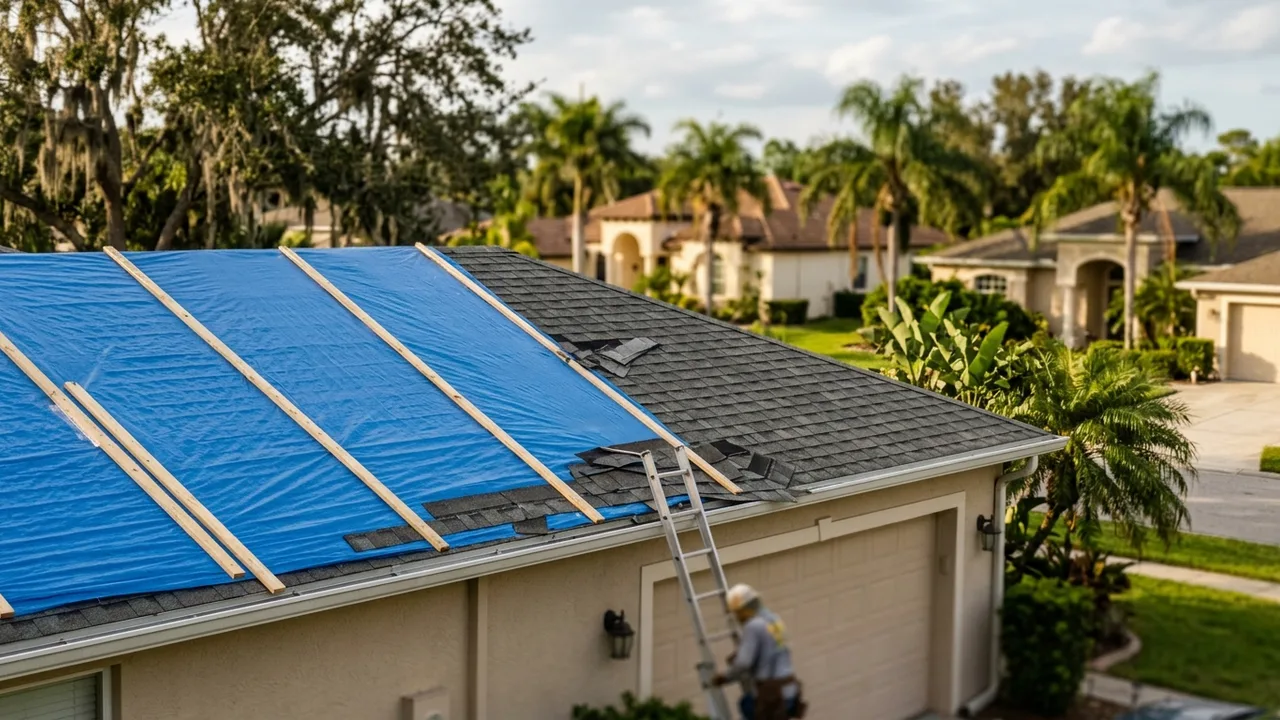
Storm Damage & Emergency Tarping in Fort Myers
Fast temporary tarping and leak control after storms to limit water entry, followed by a documented assessment for permanent repair and any homeowner's insurance claim.
Who storm damage and emergency tarping is for
Storm damage and emergency tarping is for the homeowner dealing with a live problem straight after a storm: water coming in, shingles or tiles stripped away, a limb through the roof, or debris damage plain to see from the ground. The first job is temporary protection, tarping the roof to cut down water entry, followed by a documented assessment for the permanent repair and any insurance claim. When you first reach out we ask what is happening right now, whether water is getting into the home, and how reachable the damage is. An independent Florida roofing contractor makes covering the roof and stopping the water the priority, then documents the damage properly so the permanent fix and any claim are built on real evidence rather than a rushed guess.
After the storm: hurricane roof damage you cannot always see
The urgent side of hurricane roof damage is the obvious one, water coming into the house, and the first response to that is temporary tarping to hold it back while a permanent repair is scheduled. The harder side is the damage you cannot make out from the ground. High winds lift shingles and drop them back not quite sealed, work flashing loose, and drive rain up under the covering, so a roof can look whole from the street and still be compromised. Fort Myers saw exactly this on a wide scale when Hurricane Ian came through in 2022, across Fort Myers Beach, Pine Island, Iona and the coast, which left a lot of storm and insurance work in its wake. That is why a post-storm assessment is worth doing even when nothing dramatic shows: an inspection catches lifted shingles, loosened flashing and small punctures before they turn into the leak that appears two heavy rains later. Careful documentation also sits behind any insurance claim, since the contractor records the damage and the insurer decides coverage, so clear photographs and a written assessment work in your favor.
What storm response covers
Emergency roof tarping
A temporary tarp is fitted over the damage to cut down water entry and hold the interior while a permanent repair is scheduled and priced.
Temporary leak control
Short-term measures protect the inside of the home while the roof dries out enough for a lasting repair to be carried out safely.
Storm-damage assessment
A ground-and-roof inspection looks for the lifted shingles and loosened flashing that high winds leave behind without any obvious hole.
Insurance claim documentation
Photographs and a written record of the damage are put together so any insurance claim you file rests on real evidence rather than recollection.
How working with us works
Tell us what is going on
Share your storm damage & emergency tarping enquiry and what you are seeing on the roof, plus its age and material.
On-site inspection
A Florida roofing contractor inspects the roof so your storm damage & emergency tarping is scoped to what is actually there.
Options and written estimate
You get clear options and a firm written estimate for the storm damage & emergency tarping, with any earlier figure treated as indicative.
The work, done right
Once you approve, the storm damage & emergency tarping is carried out to Florida Building Code standards and checked on completion.
Why homeowners use us for storm response
Protection comes first
The immediate priority is getting the roof covered and the water stopped, before anyone starts a conversation about the permanent repair or what it might cost to put right.
The hidden damage gets found
Wind damage often hides above a ceiling that still looks fine, so the assessment checks for lifted shingles and loosened flashing rather than stopping at the holes you can already see.
Documentation that protects you
The contractor records the damage in writing and in photographs, the insurer decides on coverage, and solid evidence is what keeps that claims process honest and moving in your favor.
Do I really need a storm damage roof repair with nothing showing?
Plenty of homeowners skip a check after a storm because nothing looks wrong from the yard, and that is precisely where the trouble tends to hide. Even with no obvious damage, a strong storm can lift shingles and reseat them loosely, work flashing free, or punch small holes that only leak once wind-driven rain is pushing water sideways under the covering. A post-storm inspection is a common, sensible way to catch those faults early, while they are cheap to sort and long before they stain a ceiling or soak into the decking. This is not about scaring anyone. Nobody can promise a roof will ride out the next hurricane untouched, and we will never pretend otherwise. It is simply that a quick, honest look over the roof after a big storm costs far less than the interior repair that follows an unnoticed leak, and it gives you a written record if you do end up needing to make a claim. You come away knowing where you actually stand rather than waiting for the ceiling to tell you.
Storm Damage & Emergency Tarping: common questions
What should I do if my roof is leaking after a storm?
How long does a roof last in Fort Myers, Florida?
How often should I have my roof inspected in Florida?
Will my homeowner's insurance cover storm roof damage?
Do roofers work on the barrier islands like Fort Myers Beach?
Storm Damage & Emergency Tarping across Fort Myers
Pick your neighborhood for the local notes, or submit the form for a free review.
Talk to a specialist
Ready to sort your storm damage & emergency tarping in Fort Myers?
Share the details and we will help you take the next step with confidence.